
Fungi challenge us to look beneath the surface,
“Fungi challenge us to look beneath the surface, live on the edge, explore the unknown, adapt, respect imperfections and differences, and to always look for another way forward. Through the mycelial lens, one can regain the ability to see the world as a whole derived from various influences and perspectives–different branches in the network assessing hidden bonds. As one learns to see innumerable connections in the world, the tools for addressing complex challenges can no longer be placed in isolation–just as the perspectives of seemingly opposing forces can be found to complement one another, especially when both seek remedy in the world.”
-Peter McCoy, from Radical Mycology: A Treatise on Seeing & Working With Fungi.
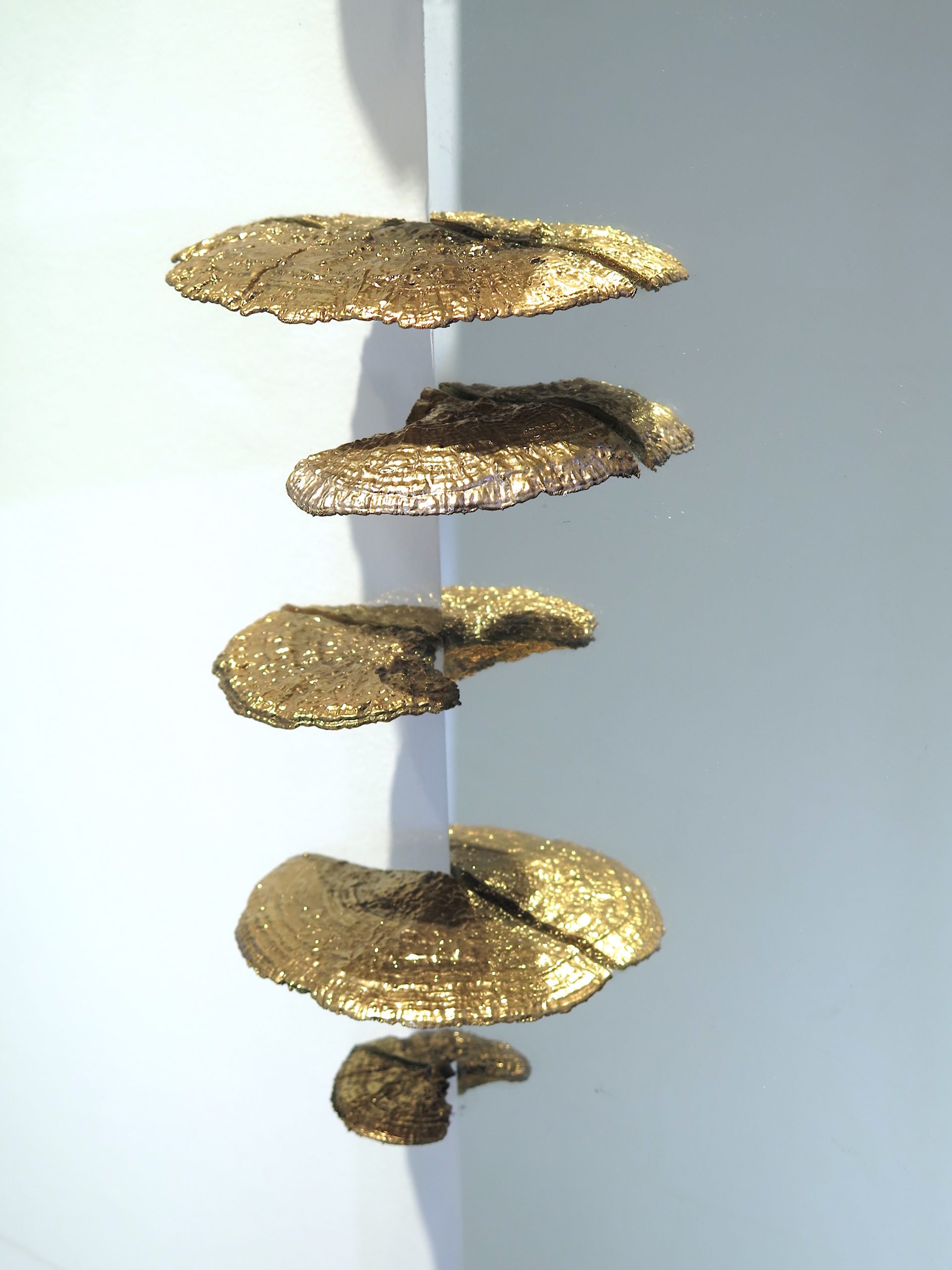
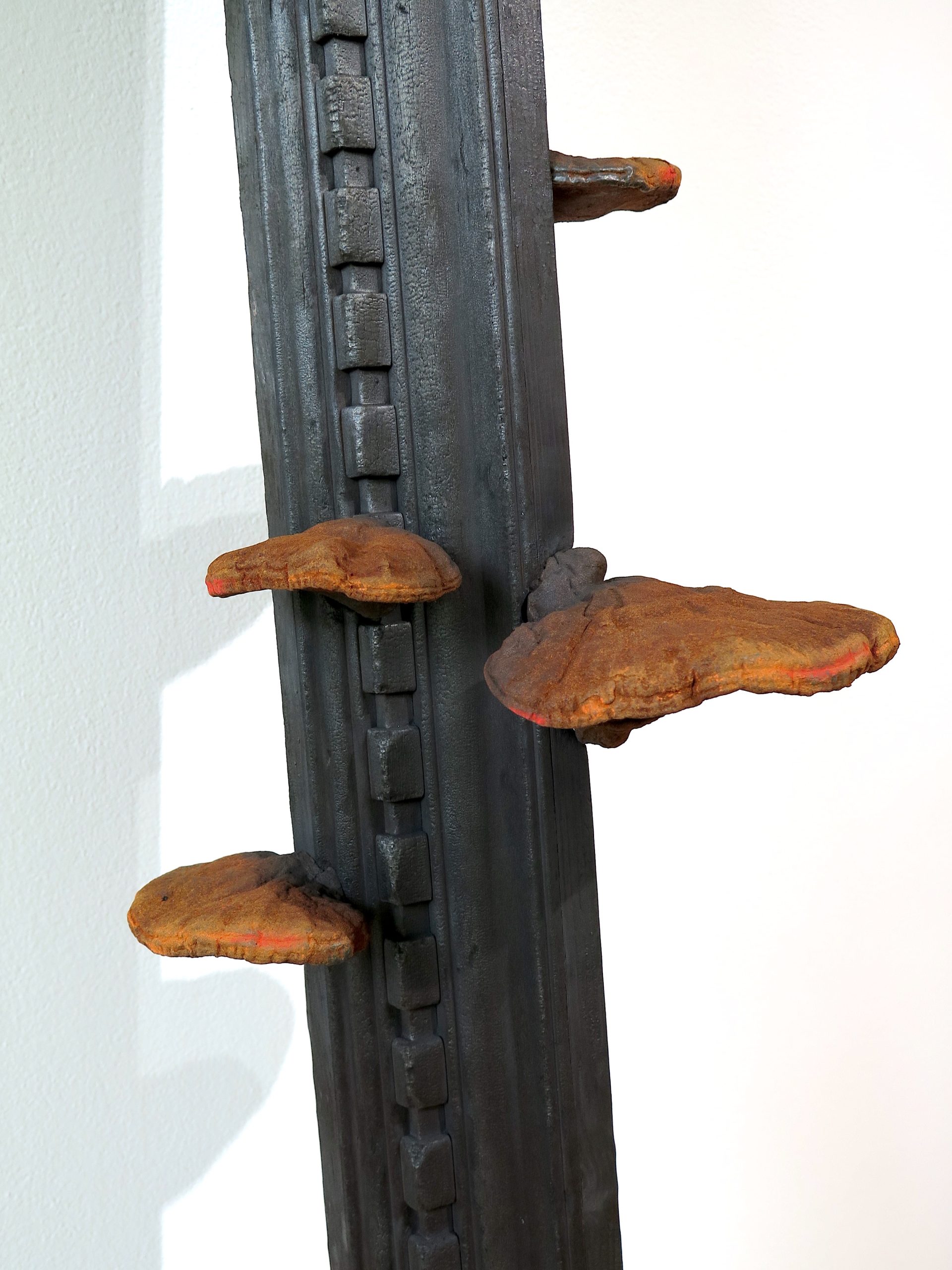
The two works that are included in How to Know What We Know: New Experiences in the Holocene are from two separate, but parallel, series that utilize woody fungi harvested from trees in northwestern Connecticut. In the case of The Understory (Sharon Valley) the fungi were directly burnt out in a ceramic shell mold before being cast in reclaimed eighteenth and nineteenth century scrap iron. The fungi in Half Life were sealed, painted with conductive paint, and electroplated with copper. The dried and sealed fungi are preserved indefinitely inside their copper skins.
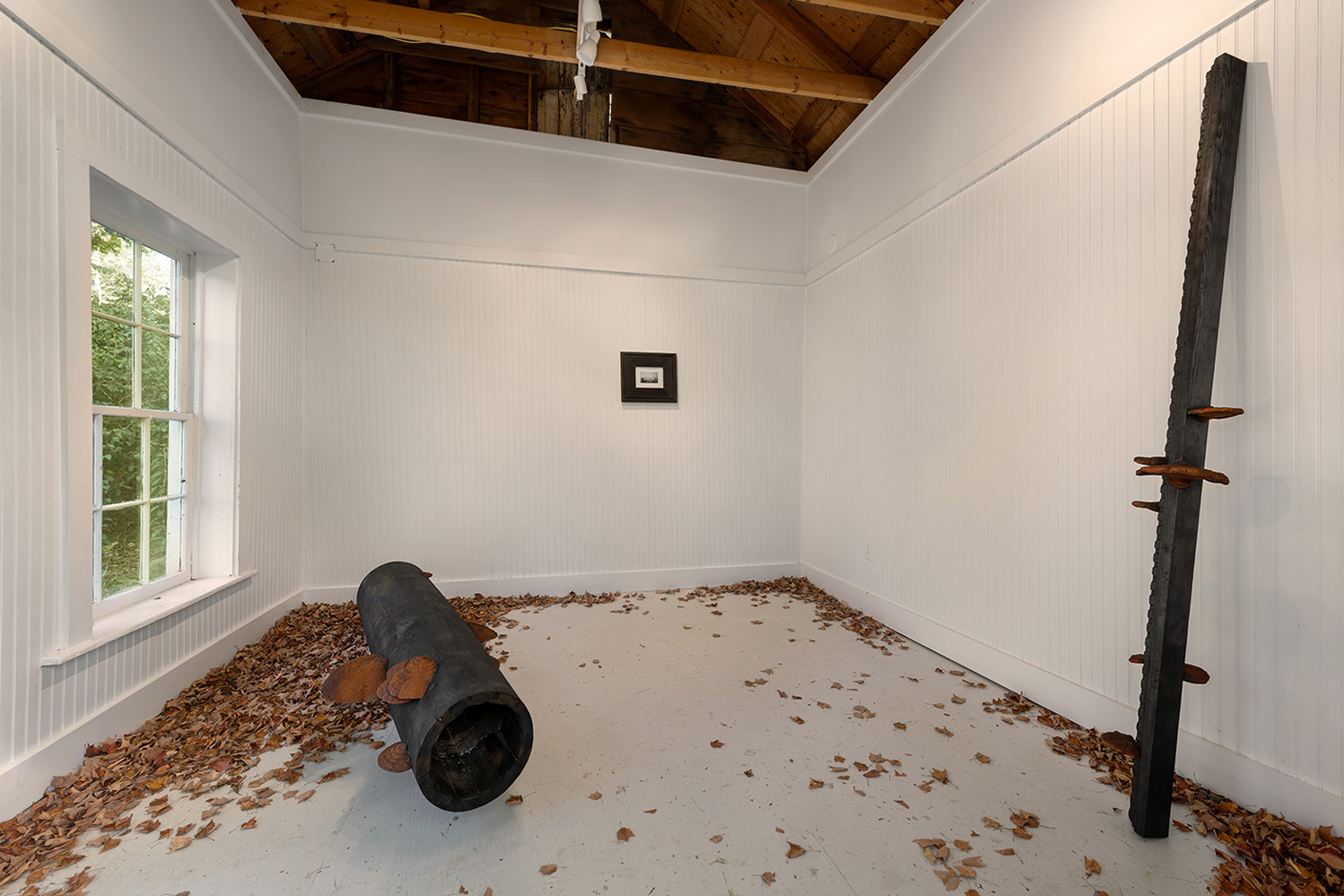
The Understory
In scattered locations in the Taconic and Litchfield hills of Connecticut and the adjacent areas of New York and Massachusetts the landscape holds hints of an enterprise that has largely been forgotten. Revealed by piles of firebrick and glassy slag, soil darkened by the remnants of charcoal, and the occasional rusty scrap of iron, these sites speak of the first great era of resource extraction following European colonization. The Understory was a contemporary response to the history of early American iron production, realized through the materials that defined the industry.
The Understory (Sharon Valley) was part of The Understory a solo exhibition that I presented at the ICEHOUSE Project Space in Sharon, Connecticut in 2021. The works in the exhibition were completely composed of native iron and wood that was reclaimed and repurposed, not as a historical recounting, but rather a meditation on deep time and the cycles of both nature and civilization. The fungi, which were directly burnt out of molds and cast in iron, come from the forests surrounding the iron furnace sites, and the vertical, burnt wood form is a fragment of architectural molding from a nineteenth century house that was torn down in Canaan, Connecticut–a town whose economy was partially based on the iron industry. At the project’s culmination in late 2021 a handful of cast iron fungi were returned to furnace sites and attached to trees where they are being allowed to gradually oxidize and merge back into the landscape.
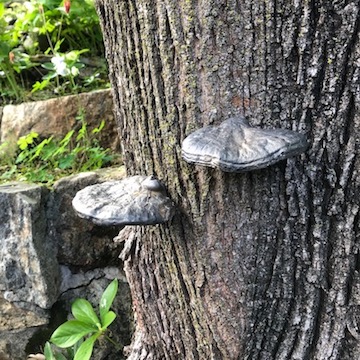
The overarching title I chose for this project, The Understory, owes a debt to Richard Power’s brilliant novel The Overstory, a powerful evocation of–and paean to–the natural world.
Iron was first discovered in Litchfield County in 1731 by surveyors Ezekiel Ashley and John Pell in Salisbury, and the first iron furnace was put into blast in Lime Rock in 1735. The period around the Civil War was the peak of iron production and the apogee of deforestation in northwestern Connecticut. On average, 600 acres of trees needed to be cut annually to create charcoal to fuel a single furnace. During the 161 years of the industry there were 22 blast furnaces smelting metallic “pig” iron from ore, 37 bloomery forges (a crude form of blast furnace) and 22 finery forges and puddling works that refined pig iron into wrought iron. Seventy percent of the forest in northwestern Connecticut was harvested for charcoal by the 1870s, resulting in much of the fertile topsoil washing into the region’s rivers and streams. Currently, Litchfield County is seventy-five percent forested.
In 1770 the British North American colonies became the world’s third largest iron producer, threatening the prosperity of English ironmakers. In 1776, Connecticut’s Committee of Safety seized the Lakeville Furnace in order to produce cannons for the Continental Army during the Revolution. The production of weapons during the war earned the region the title “Arsenal of the Revolution,” a distinction that continued into the nineteenth century and through to the Civil War. Northwestern Connecticut provided iron for a range of armaments and munitions and in 1864 the Ames Iron Works in Falls Village produced cannons for the Navy, including 13 guns capable of firing a 100 lb. ball over six miles. This early utilization of iron for the production of armaments laid the groundwork for the modern defense industries in Connecticut, with examples including General Dynamics (submarines), Sikorsky (helicopters), and Pratt and Whitney (jet engines).
The iron industry in Connecticut began to decline in the last decades of the nineteenth century due to missed opportunities to keep up with new technologies and with the spread of the railroads that allowed easy access to high-quality iron deposits further west as well as to the coal fields of Pennsylvania. For instance, the Cornwall Bridge furnace, which began production in 1833, went cold in 1897. In 1923 the East Canaan furnace shut down, marking the end of iron production in the region.
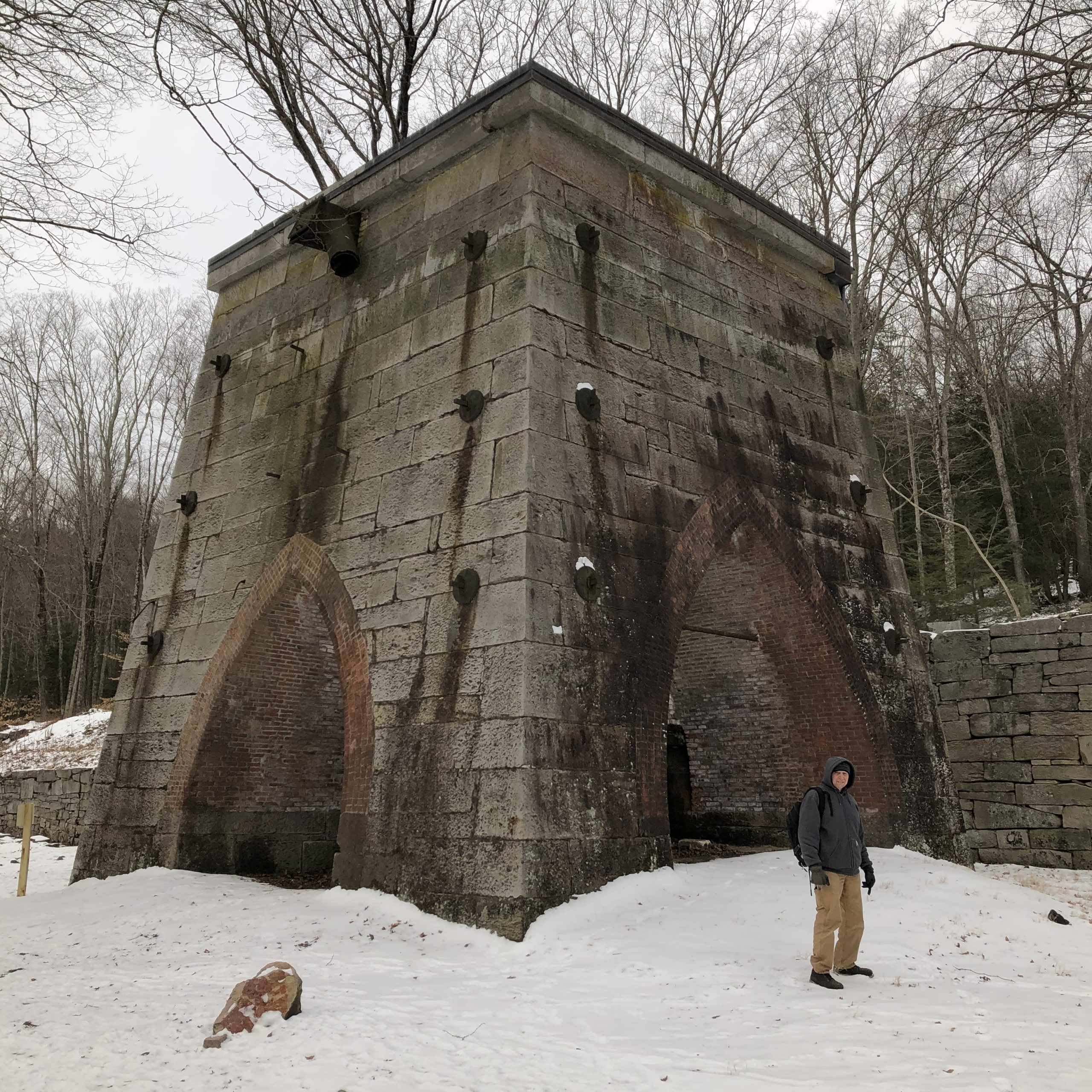
CONNECTICUT FURNACES
By and large, the iron industry and its environmental impacts have faded from view in northwestern Connecticut, with only a handful of furnaces still standing. Most of the furnace sites are only marked by collapsing stonework, piles of firebrick and slag heaps that are quickly being subsumed back into the earth. The open-pit mines have filled with water and become lakes and the forest has largely grown back to reclaim the region’s hills and valleys. The once ubiquitous nature of the industry is frequently revealed through the numerous roads and brooks that dot the map with “furnace” in their names.
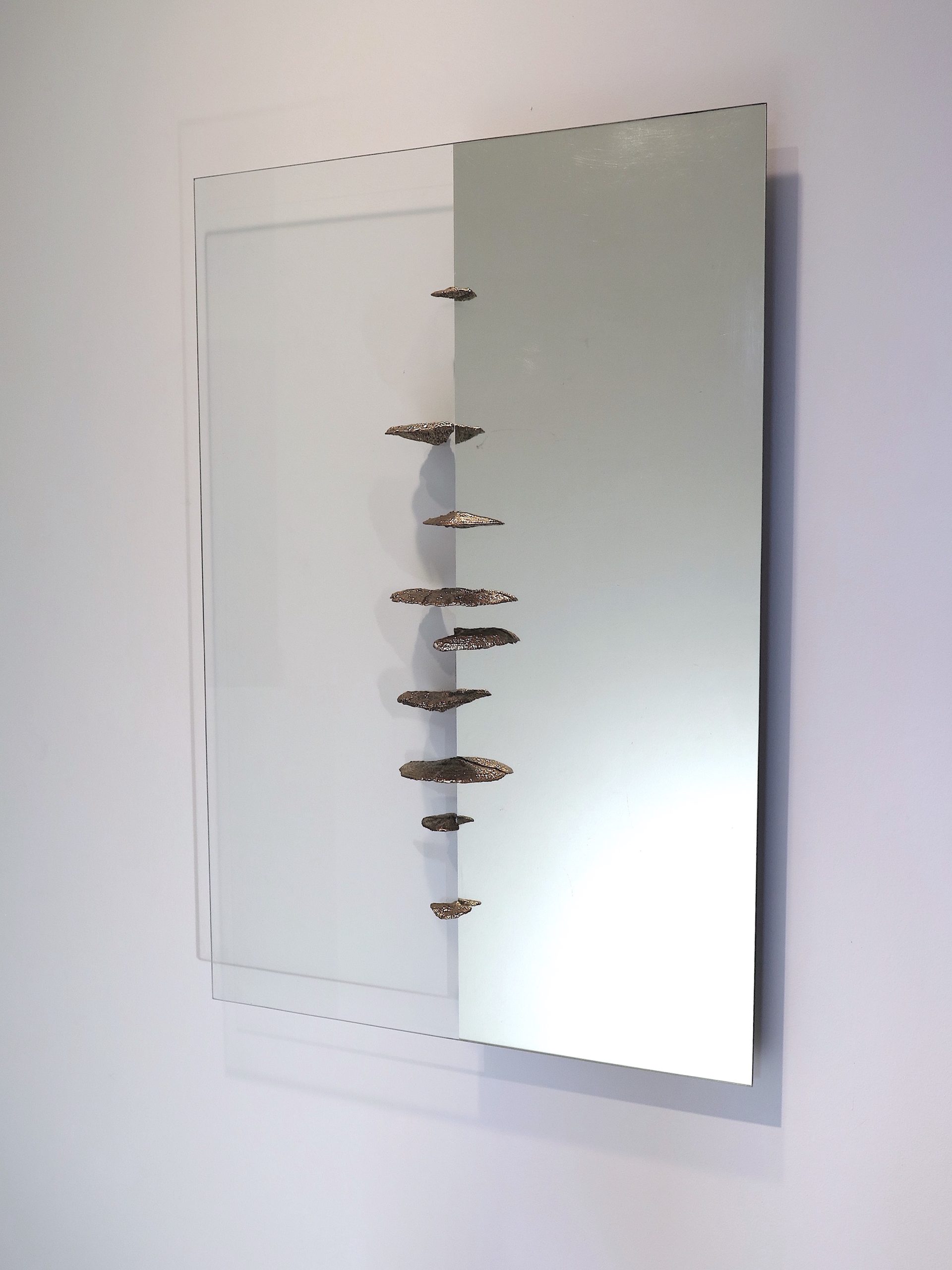
Half Life, 2022
Copper plated Gilled Polypore fungi, white gold leaf on tempered plate glass, aluminum support | 37” (h) x 25” (w) x 4 ½” (d)
I have utilized woody fungi in my work since the 1990s.
The majority the works incorporating fungi are mirrored objects: hand mirrored with gold or white gold leaf on recycled plate glass. From antiquity to the present day, the mirror has consistently occupied a unique place in the human imagination: as a site of the divine or demonic, as an agent of lucidity or madness, or an instrument for self-knowledge or vanity. Fungi also entertain opposites, functioning as life forms that are generative and critical to the health of ecosystems, while simultaneously being the prime vector for decay in the organic world. The work Half Life is an attempt to reconcile these dualities by literally having fungi poised on the boundary between the seen and the unseen, the opaque and the transparent, and the eternal and the temporal. Fungi don’t photosynthesize, rather living off the remnants of sunlight gathered by other lifeforms. Mirrors and glass draw our attention to the relationship between light and matter: mirrored surfaces re-present and refine light, while glass–a solid material–lets light pass through freely while also having the ability to focus its rays. Fungi and mirrors have both played roles in the evolution of human consciousness by offering models that confound habitual thinking. In recent years the underground mycorrhizal communication network created by fungi has been referred to as the “Wood Wide Web.” This concept has gained traction parallel to the interconnected wiring of the world’s computer networks, which is dependent on the “ancient” metal copper for the transmission of data. The fungi in Half Life are sheathed in copper, a metal that is critical to the green energy revolution. Additionally, the recent COVID pandemic has hastened research into the antimicrobial properties of copper, a peculiarity of the metal that was first discovered in the nineteenth century.